
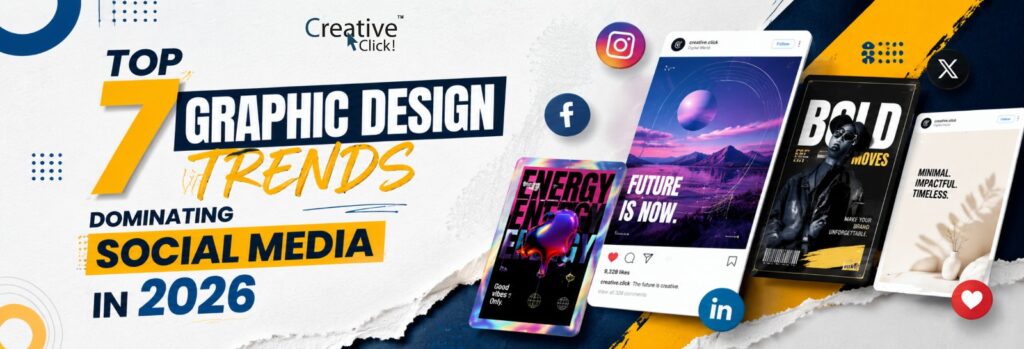
Social media has become one of the most powerful platforms for communication, branding, marketing and customer engagement. Every day, millions of businesses compete for audience attention across platforms such as Instagram, Facebook, LinkedIn, YouTube, Pinterest and emerging Graphic designing trends. In this highly crowded environment, content alone is no longer enough. The way content is presented visually often determines whether a user stops scrolling, engages with a post, or moves on to the next piece of content.
As attention spans continue to decrease and competition for visibility increases, businesses are investing more heavily in design than ever before. Modern consumers make judgments about brands within seconds and those judgments are often influenced by visual presentation rather than written content. This is why effective social media design has become a crucial component of modern marketing strategies.
Design trends continue to evolve as consumer preferences, platform algorithms and digital technologies change. What worked a few years ago may no longer resonate with today’s audiences. Businesses that understand emerging design trends are better positioned to create engaging content, strengthen visual branding and build a memorable brand identity that stands out in a competitive marketplace.
While many marketers still reference graphic design company in indore 2025, the design landscape has evolved significantly, introducing new creative approaches that are now dominating social media in 2026. These trends are influencing how brands communicate, engage audiences and build long-term digital presence.
In this blog, we’ll explore the top seven graphic design trends shaping social media in 2026 and why businesses should pay close attention to them.
The Growing Importance of Design in Social Media Marketing
Before diving into specific trends, it’s important to understand why design has become such a critical factor in digital marketing success.
Social media users consume content at an incredible speed. Most people decide within a few seconds whether a piece of content deserves their attention. In many cases, visual design is the first thing users notice before reading captions, watching videos, or exploring products.
Strong design helps businesses communicate messages quickly and effectively. It improves content visibility, strengthens brand recognition, increases engagement and creates a more professional image. Well-designed content can significantly influence customer perception and purchasing decisions.
Modern brands no longer treat design as a supporting element. Instead, it has become a core part of marketing strategy, customer experience and business growth.
1. AI-Assisted Design and Creative Automation
Artificial intelligence is transforming nearly every creative industry and graphic design is no exception. One of the most significant developments in 2026 is the integration of AI marketing agency in Indore. Platform creative specs are published on Meta for Business.
Designers are increasingly using artificial intelligence to generate concepts, create design variations, suggest layouts, optimise compositions and automate repetitive tasks. Rather than replacing creativity, AI is helping designers become more productive and efficient.
Businesses can now produce larger volumes of content without sacrificing quality or consistency. AI tools also enable marketers to personalise content for different audience segments, making campaigns more relevant and effective.
This trend is particularly valuable for brands that require frequent content creation across multiple platforms. AI-assisted workflows help maintain consistency while reducing production time.
However, successful design still requires human creativity, emotional intelligence and strategic thinking. The most effective brands are using AI as a tool to enhance creative capabilities rather than replace them.
2. Bold Minimalism and Simplified Visual Branding
Minimalist design has been popular for several years, but in 2026, it has evolved into a bolder and more impactful style.
Today’s audiences are overwhelmed with information. As a result, brands are simplifying their visual communication to ensure messages are understood quickly. Clean layouts, strong typography, generous white space and strategic use of colour are becoming increasingly common.
Bold minimalism focuses on clarity rather than complexity. Instead of filling every space with graphics and text, designers are prioritising visual hierarchy and message delivery.
This trend plays a major role in strengthening graphic design agency in indore because it makes content easier to recognise and remember. Brands that adopt a consistent minimalist style often develop stronger identities and improve audience recall.
The effectiveness of this trend lies in its ability to communicate professionalism while maintaining visual impact.
3. Motion Graphics and Animated Social Media Content
Static content continues to have value, but motion has become one of the most effective ways to capture attention in crowded social feeds.
Motion graphics, animated text, dynamic transitions and short visual effects are now common components of modern social media design. These elements encourage users to stop scrolling and engage with content for longer periods.
Platforms such as Instagram, Facebook and LinkedIn increasingly reward content that keeps users engaged. Motion graphics naturally support this objective by creating more immersive visual experiences. Format requirements are listed in the Meta Business Help Centre.
Many brands are integrating subtle animations into their content rather than relying solely on traditional video production. Even simple animated elements can significantly increase engagement and improve content performance.
As social media algorithms continue prioritising engagement, motion-driven design is expected to remain one of the most influential trends in the coming years. Image and media guidance for search sits in Google Search Central.
4. Hyper-Personalised Instagram Post Design
Consumers increasingly expect brands to deliver content that feels relevant and personalised. Generic messaging is becoming less effective because audiences prefer experiences tailored to their interests and needs.
This has led to a growing focus on personalised Social media marketing agency in Indore and audience-specific content creation.
Modern brands are using customer insights, behavioural data and audience segmentation to develop highly targeted visual content. Rather than creating one design for everyone, businesses are producing multiple variations that appeal to different customer groups. Personalisation improves engagement because users are more likely to interact with content that reflects their interests, challenges and preferences.
Successful personalisation extends beyond demographics. It involves understanding audience psychology and creating visual experiences that resonate on a deeper level.
Brands that embrace personalised design often experience stronger customer loyalty and improved campaign performance.
5. Storytelling Through Carousel Content
One of the most significant changes in social media content strategy is the growing popularity of carousel posts and multi-slide storytelling formats.
Rather than communicating a message through a single image, brands are using sequential content to guide users through stories, educational content, tutorials, case studies and insights.
This trend aligns perfectly with modern audience behaviour. Users increasingly seek value-driven content that educates, informs, or entertains while remaining visually engaging.
Effective carousel design requires careful planning, consistent branding and strong visual flow. Each slide must encourage users to continue to the next while contributing to the overall narrative.
Businesses using carousel storytelling often achieve higher engagement rates because users spend more time interacting with their content.
This approach has become a key component of modern social media design strategies across multiple industries.
6. Authentic Design and Human-Centred Visual Communication
Consumers today are increasingly drawn toward authenticity. Overly polished corporate content is gradually being replaced by designs that feel more genuine, relatable and human.
Brands are incorporating real photography, hand-drawn illustrations, behind-the-scenes content and organic visual elements into their marketing materials.
This shift reflects broader consumer preferences for transparency and emotional connection. Audiences want to engage with brands that feel approachable rather than overly corporate.
Authentic design helps strengthen Digital Marketing Agency because it communicates personality and values rather than simply promoting products or services.
Businesses that embrace authenticity often build stronger relationships with their audiences and create more meaningful engagement opportunities.
As consumers continue valuing trust and transparency, authentic design is expected to remain a dominant trend throughout 2026 and beyond.
7. Consistent Brand Identity Across Platforms
As brands expand across multiple digital channels, maintaining consistency has become increasingly important.
Modern consumers interact with businesses on numerous platforms, including websites, social media channels, email campaigns, mobile applications and online advertisements. Consistency across these touchpoints helps build trust and recognition.
A strong brand identity includes consistent use of colours, typography, imagery, messaging and design styles. Businesses that maintain visual consistency are more likely to be remembered by their audiences.
This trend has encouraged companies to move beyond individual post creation and focus on comprehensive branding systems that guide all content production efforts.
Strong visual branding improves customer recognition, strengthens credibility and contributes to long-term marketing success.
At Creative Click, businesses are increasingly encouraged to develop cohesive visual ecosystems rather than treating each piece of content as a standalone design.
The Growing Demand for Graphic Design Training in Indore
As businesses place greater emphasis on visual communication, demand for skilled designers continues to increase.
Many aspiring professionals are seeking Graphic Designing Agency in Indore programs to develop expertise in branding, content creation, motion graphics, social media design and modern creative technologies.
Today’s design industry requires a diverse skill set that extends beyond traditional graphic design principles. Designers must understand audience psychology, platform algorithms, content strategy and emerging technologies such as AI-assisted design.
The ability to combine creativity with strategic thinking has become one of the most valuable skills in the industry.
As social media continues evolving, trained design professionals will play an increasingly important role in helping brands build meaningful digital experiences.
Why Businesses Need a Creative Design Agency in 2026
Keeping up with rapidly changing design trends can be challenging for businesses focused on daily operations.
This is why many organisations choose to work with a professional graphic designing companies in indore that understands current trends, audience behaviour and platform requirements.
A specialised agency helps businesses create visually engaging content while maintaining consistency, professionalism and strategic alignment with business objectives.
Working with an experienced design partner allows brands to stay ahead of trends while ensuring that creative efforts contribute directly to marketing performance and business growth.
How Creative Click Helps Brands Stay Ahead of Design Trends
As a modern creative design agency, Creative Click helps businesses adapt to changing design landscapes while maintaining strong brand consistency and audience engagement.
Rather than simply creating attractive visuals, Marketing companies focuses on developing strategic design solutions that support marketing goals and strengthen brand positioning. The agency combines creativity, storytelling, audience insights and contemporary design practices to produce content that resonates with modern consumers.
From advanced video and reel editing agency in indore and social media campaigns to complete visual branding systems, Creative Click helps businesses build stronger digital identities and improve audience engagement across multiple platforms.
By staying ahead of emerging trends and evolving technologies, the agency enables brands to remain relevant in a highly competitive digital marketplace.
Conclusion
The future of social media marketing is increasingly visual and businesses that prioritise design will have a significant advantage in capturing attention and building meaningful audience relationships.
The latest graphic design trends 2025 have evolved into more sophisticated approaches in 2026, including AI-assisted creativity, bold minimalism, motion graphics, personalised content, authentic storytelling and consistent brand identity development.
These trends are transforming how brands approach social media design, communicate with customers and strengthen visual branding across digital platforms.
Whether you’re a business owner looking to improve your online presence, a marketer seeking stronger engagement, or a student exploring graphic design training in Indore, understanding these trends is essential for staying competitive in today’s digital environment.
As design continues evolving, businesses that embrace innovation while maintaining authenticity will be best positioned to attract audiences, build trust and achieve long-term success in the ever-changing world of social media marketing.